Trade and the Circular Economy: A deep dive into plastics action in Ghana
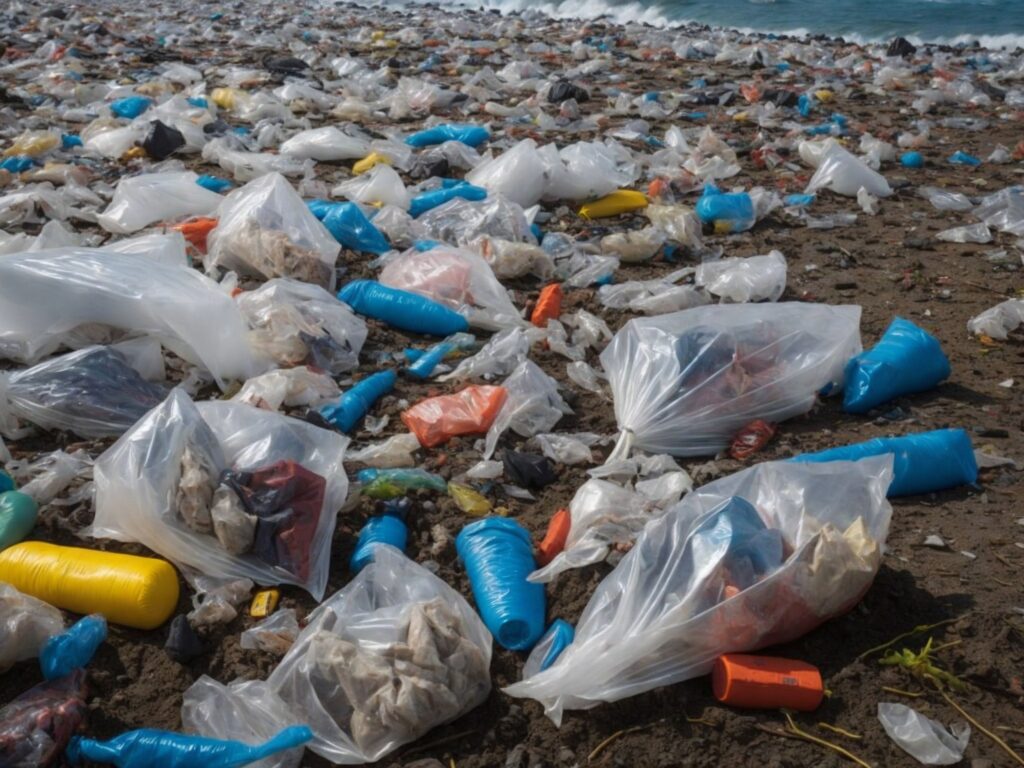
Plastic pollution represents one of the most pressing environmental challenges facing rapidly growing economies in the Global South. Business-as-usual projections suggest that global plastic consumption could more than triple by 2050, from around 380 million metric tons today to 1.3 billion metric tons — with disproportionate consequences for coastal and developing countries that lack the waste management infrastructure to cope with the surge. It is against this backdrop that this publication examines how trade flows and trade policies can help or hinder a country’s ability to address plastic pollution and transition to a circular economy, using Ghana as a case study.
This report was jointly commissioned by the Global Plastic Action Partnership (GPAP), an impartial initiative of the World Economic Forum, and the Forum’s Platform for Shaping the Future of Trade and Global Economic Interdependence. Ghana — an oil-producing, coastal country with ambitious economic growth and industrialisation plans and a burgeoning plastic waste problem — is home to one of GPAP’s flagship national partnerships, making it a particularly apt setting for this analysis. The report presents a preliminary assessment of trade policy options, with the identified areas meriting further investigation.
The report is structured around two broad mechanisms: domestic policy instruments and trade agreements, drawing links between the two. On the domestic side, with around 70% of plastic inputs used in Ghana for packaging and recycling rates as low as 2% for PET plastics, the paper identifies urgent measures to accelerate waste reduction, reuse, and recycling. These include disincentivising single-use plastics through deposit refund schemes, creating a domestic market for recycled plastics by mapping offtake opportunities across industries such as consumer goods, construction, and textiles, and evaluating Ghana’s potential to develop into a regional plastic waste recycling hub. It also emphasises the importance of strengthening border controls in line with the Basel Convention’s Prior Informed Consent procedures to keep hazardous and hard-to-recycle plastic waste out of Ghana’s market.
On the trade policy side, the report examines how Ghana can strategically leverage its trade agreements to advance its circular economy agenda. This includes identifying goods required for its plastic waste management strategy and reviewing tariff schedules accordingly within the ECOWAS Common External Tariff framework; negotiating services schedules and investment chapters in trade agreements to attract investment in the plastic waste sector and ensure investors adhere to sound environmental practices; and using the AfCFTA’s Technical Barriers to Trade Annex to develop regional standards for different grades of recycled plastic. The brief also highlights the EU-Ghana Economic Partnership Agreement as a vehicle for preparing Ghanaian exporters to meet evolving EU plastic packaging standards, and encourages Ghana to engage in relevant plurilateral initiatives at the WTO, including dialogues on plastics pollution and trade, environmental sustainability, and fossil fuel subsidy reform.
The report concludes that Ghana has a genuine opportunity to convert its plastic waste challenge into a competitive advantage, but doing so will require a coordinated, inter-ministerial approach that integrates trade and environmental policy and engages the private sector in public-private dialogue.
Authors
-

-
 Clem Ugorji