- Outreach
- Policy Research & Analysis
Aligining EU trade, environment, and development policy
Tulip supported Europe Jacques Delors, a leading Brussels-based think tank working on European integration and sustainable development, in advancing policy research and outreach at the intersection of EU trade, climate, and development policy. This multi-year engagement combined rigorous policy analysis with strategic stakeholder engagement and high-level outreach, producing a body of work that contributed to shaping policy thinking on some of the most contested dimensions of the EU’s external agenda.
The project examined how to advance the EU’s green trade agenda within the framework of the European Green Deal and the Clean Industrial Deal, while paying close attention to the potential negative spillovers of EU regulatory measures on developing countries and least-developed countries. At a time of growing global debate over the extraterritorial effects of EU climate and environmental regulation, this work sought to identify pathways for reconciling the EU’s domestic sustainability ambitions with its commitments to international cooperation and open, rules-based trade.
A central strand of the project focused on the design and implementation of key EU regulatory instruments with significant implications for trading partners. This included analysis of the Carbon Border Adjustment Mechanism (CBAM) — one of the most prominent and politically sensitive elements of the EU’s climate policy toolkit — examining its trade, competitiveness, and development implications. The project also looked at other measures such as the Ecodesign for Sustainable Products Regulation (ESPR) and the EU Steel and Metals Action Plan, analysing the cumulative regulatory burden on sectors undergoing rapid transformation and the implications for global value chains.
Beyond regulatory measures, the project explored the evolution of EU trade agreements and new partnership models, examining how bilateral instruments can complement unilateral regulatory measures and be leveraged to advance sustainable development objectives in partner countries. This included analysis of the emerging model of Clean Trade and Investment Partnerships (CTIPs), a new instrument designed to combine trade, investment, and climate objectives in a more integrated framework.
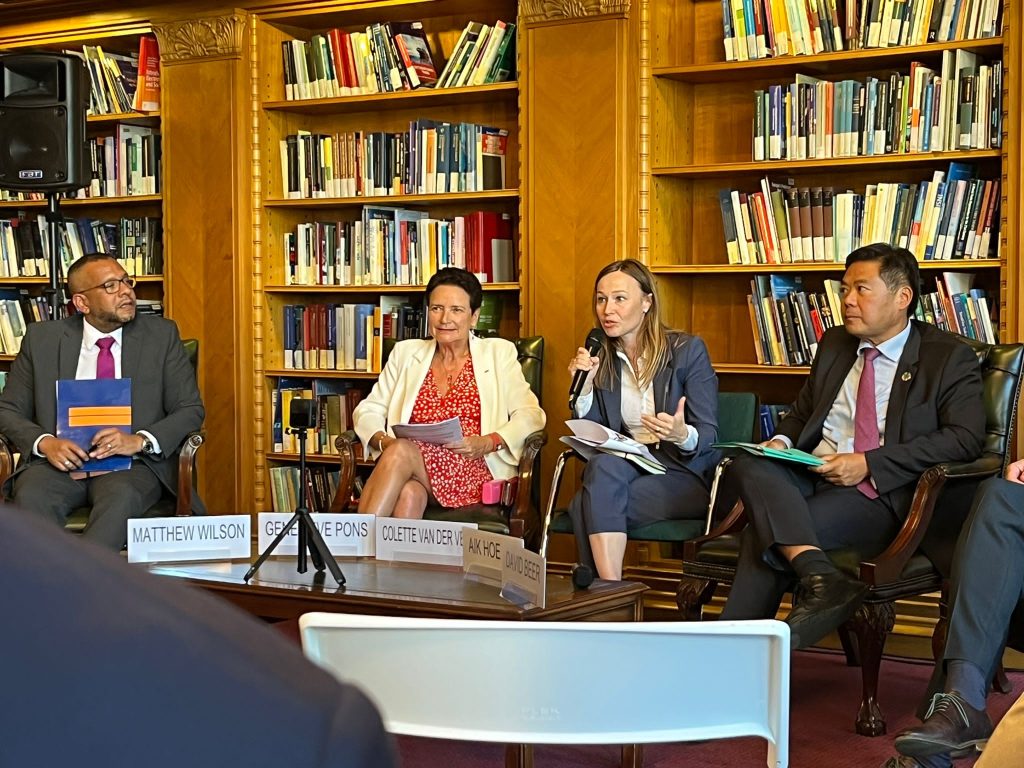
Throughout the engagement, Tulip produced several policy papers, briefs, and commentaries that fed directly into European and international policy debates, cited regularly in key European and International outlet such as the Financial Times, Politico Europe, and Agence Europe. Alongside written outputs, the project involved active participation at major international fora, including co-hosted high-level panels at the WTO Public Forum, WTO Trade and Environment Week, and the inaugural Trade Pavilion at COP28 (Dubai, 2023). The engagement also included regular dialogue with EU institutions, member state representatives, international organisations, business associations, and civil society, helping to bridge different perspectives on how the EU can green its trade policy while remaining attentive to the trade and development interests of its partners.