- Technical Assistance & Capacity Building
Green Trade and Industrial Policy: Capacity Building Workshop for Guyanese Government Officials
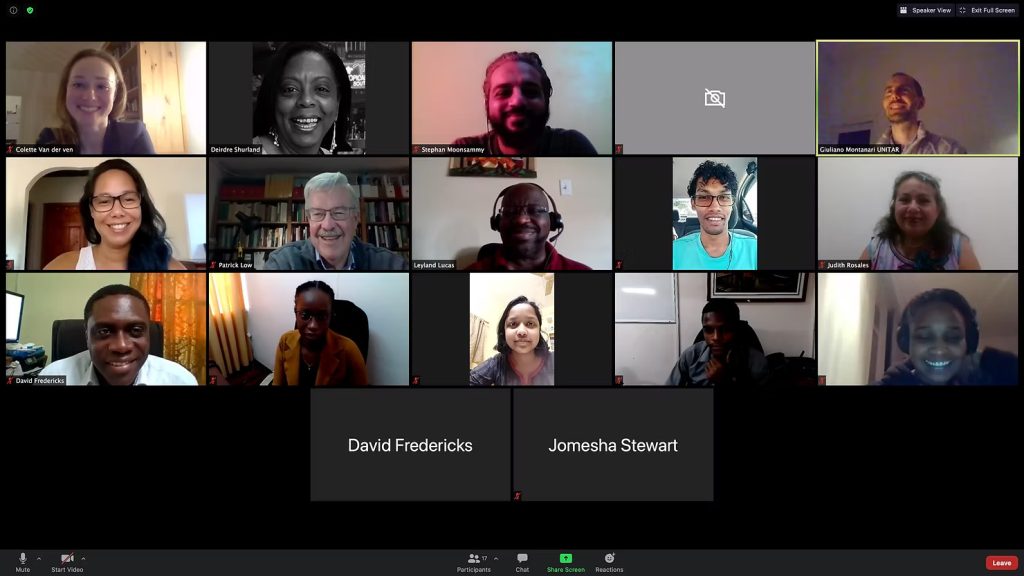
TULIP delivered a three-day training workshop on Green Industrial Policy and Trade for Guyanese government officials, jointly organised by the United Nations Environment Programme (UNEP) and the United Nations Institute for Training and Research (UNITAR) under the umbrella of the Partnership for Action on a Green Economy (PAGE), with support from the University of Guyana. The workshop was taught by TULIP advisory board member Patrick Low and Director Colette van der Ven.
The workshop was designed to build participants’ technical knowledge and skills at the intersection of trade and industrial policy, supporting them in the design, implementation, and evaluation of public policies aligned with Guyana’s national sustainability objectives.
A central theme was how to build a green economy in the context of Guyana’s discovery of extensive offshore oil and gas reserves — a distinctive challenge that makes the country’s green transition both more complex and more consequential. Key topics included the dual environmental and economic rationale for a country like Guyana, with negligible CO2 emissions, to invest in green industries; the parameters to use in determining which industries to prioritise; the advantages and disadvantages of different trade policy instruments — including subsidies, tariffs, and standards — in advancing a green economy; and how to leverage existing trade agreements, including CARICOM and the EU-CARIFORUM Economic Partnership Agreement (EPA), to support green industrial development.
Throughout the workshop, participants applied the concepts introduced to Guyana-specific case studies, ensuring that the learning was grounded in the country’s particular economic, environmental, and institutional context.