
Aligning Trade, Climate, and Industrial Strategy: EU-India Cooperation on Steel Decarbonization
The Indian steel sector is a climate bomb waiting to go off. As the world’s fastest-growing steel sector, it is projected to quadruple steel output by 2050 – producing 20% of global steel. This will have significant climate implications, given that Indian steel has the highest emissions intensity among the world’s top steel-producing economies – around 30% above the global average.
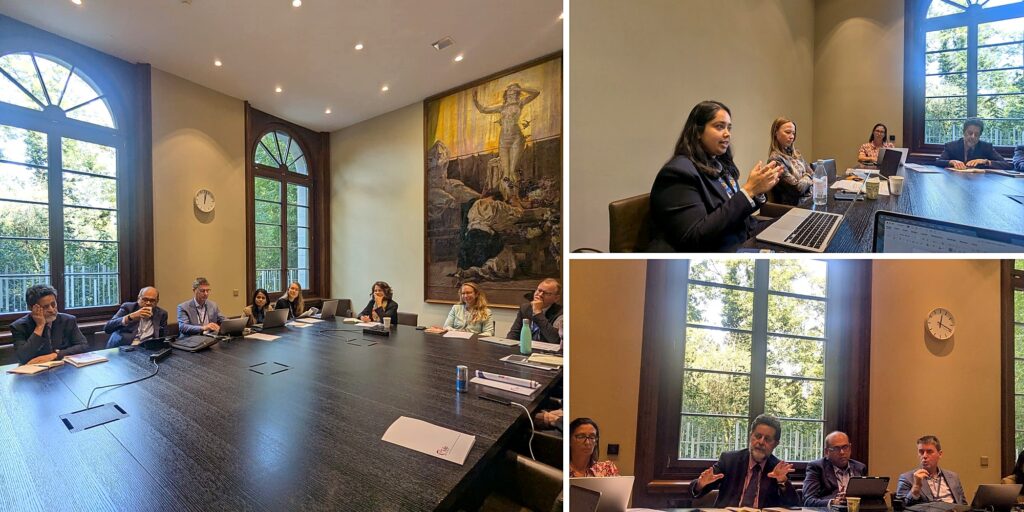
EU-India cooperation on trade and investment can play a critical role in reducing carbon emissions in the Indian steel sector. Building on TULIP Consulting’s recent study, CBAM and Beyond: Leveraging EU–India Trade Cooperation to Decarbonise Indian Steel, this roundtable, organised as part of the inaugural Curated Conversations series hosted by the Geneva Trade Platform in partnership with the World Trade Organization (WTO), will examine opportunities for strengthened EU-India cooperation on steel decarbonization – going beyond the CBAM.
Strategic cooperation between the EU and India will be crucial to achieving steel decarbonization goals: while India offers a large market, low-cost, scalable manufacturing capabilities, and abundant renewable energy resources, the EU is a leader in innovative steel decarbonization technologies and could bring in capital and investment. The recently concluded EU-India FTA and the parallel strategic framework provide an important foundation for strengthening the parties’ cooperation in steel decarbonization.
Recent trade policy developments complicate the picture. While the EU is encouraging trading partners to decarbonize production through instruments like CBAM, it is simultaneously placing greater emphasis on protecting its own steel industry and restricting import exposure, including by a recent tariff-rate quota on steel. This risks undercutting incentives for Indian steel decarbonization. The EU’s export restrictions on scrap steel – a key input for steel decarbonization – further add to the complexity.
The challenge, therefore, is to determine whether India and the EU can build a steel decarbonization partnership around areas of strategic alignment, while identifying how trade, climate and industrial policies can be made mutually reinforcing rather than working at cross-purposes.
Guiding questions:
- How can we reframe EU-India cooperation on steel decarbonization around strategic alignment?
- How can the EU-India FTA deliver on steel decarbonization?
- Can EU–India cooperation on steel decarbonization be reconciled with the EU’s increased emphasis on protecting its domestic steel sector?
Participation and registration
Participation in this session is by invitation only. To register your interest in attending in-person, please contact us at info@tulipconsulting.ch.
Please note: All participants must also be officially registered for the WTO Public Forum 2026 to access the WTO premises.
Full speaker line-up to be announced soon.