
Supporting the Involvement of Small and Medium-sized Enterprises in E-commerce
E-commerce offers tremendous potential for small firms to access global markets, and many have already capitalized on the opportunity. This success is far from universal. For SMEs from developing countries in particular, involvement remains limited. This session, which was part of UNCTAD’s third E-commerce Week, sought to identify practical initiatives that can be taken to address the limited involvement of SMEs from developing countries in particular.
For small firms to be successful in e-commerce they must be able to “connect the dots” so that the product or service can find its way to the customer and payments can flow in the opposite direction. This simple equation works well in developed countries: firms generally do not have difficulty arranging for online payment solutions and have a range of delivery options available.
This is not the case in the majority of developing countries, where online payment solutions are practically unavailable and logistics services unreliable and expensive. Poor infrastructure and a lack of supporting business services are additional handicaps.
Small firms all face greater difficulty with e-commerce across borders: handling taxes and duties and returned goods can create major problems. And doing business with foreign customers poses additional challenges to create awareness and trust.
Contrasting the experience of SMEs in developed countries with those elsewhere, the session explored how e-commerce has reshaped trade for small firms, what conditions have driven its adoption, which difficulties are shared universally, which parts of the ecosystem remain missing or costly in developing countries, and how stakeholders can work together on solutions.
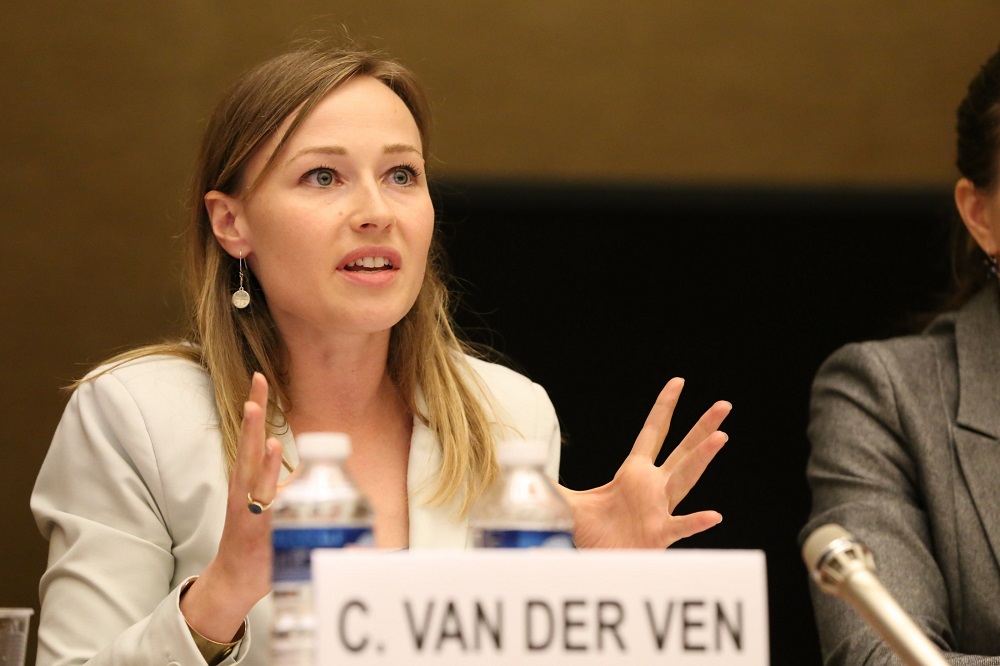
Contributing to this discussion, Colette van der Ven, noted that while the world increasingly looks to e-commerce, “you need to have commerce” to begin with. The consumer now decides where the markets are. She highlighted the advisory needs of small retailers around tax and the shipping of small packages, which are governed by different rules than container freight, and described a platform developed with the ITC to tackle these problems through a cooperative that gives sellers who would otherwise face separate lawyers shared access to legal support.
In person Room XVIII, Palais des Nations Geneva
Speakers
-
 Arancha Gonzalez Executive Director, ITC
 -
Liam Fox Secretary of State for International Trade, United Kingdom of Great Britain and Northern Ireland
-
Althea Erickson Senior Director, Global Advocacy and Policy, Etsy
-
Hanne Melin Olbe Director Global Public Policy, eBay
-
-

-
Susan F. Stone Director, Trade, Investment and Innovation Division, UN ESCAP
-
Victoria Saue Head of Legal and Compliance, e-Residency, Estonia