
- Policy Research & Analysis
- Technical Assistance & Capacity Building
Leveraging Trade, Investment, and Industrial Policy for Circular Textile Value Chains in Jordan
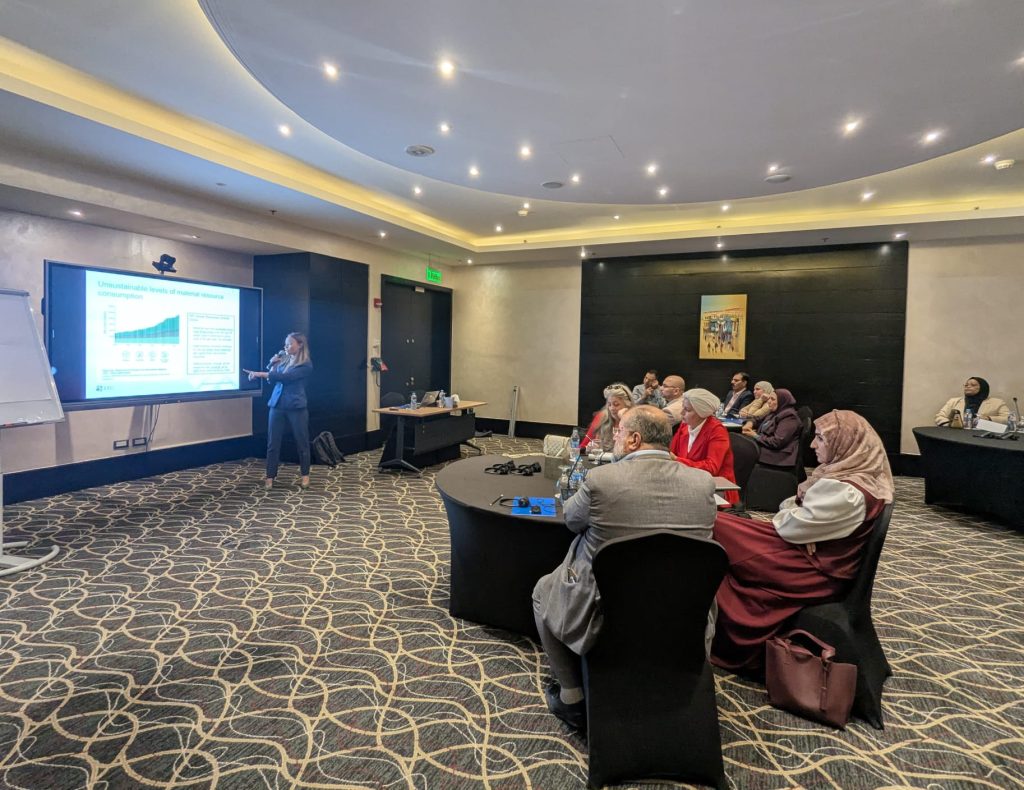
The textile and clothing sector is a significant contributor to Jordan’s economy, but is navigating a challenging and rapidly shifting trade environment. US tariffs have hit Jordan’s textile exports hard, accelerating the need to diversify toward new markets, including the EU, which represents a significant opportunity. However, accessing the EU market requires meeting increasingly stringent environmental and product standards under its circular economy agenda, including the EU Strategy for Sustainable and Circular Textiles, Extended Producer Responsibility (EPR) requirements, and the Ecodesign for Sustainable Products Regulation (ESPR). At the same time, Jordan’s domestic regulatory framework has not kept pace with these developments, creating both compliance challenges and missed opportunities for value creation through circular economy approaches.
TULIP provides policy support to the International Trade Centre’s (ITC) MENATEX programme in Jordan, a regional initiative aimed at strengthening the competitiveness and sustainability of the textile and clothing sectors across the Middle East and North Africa. Tulip’s engagement focuses specifically on advancing circularity in Jordan’s textile sector through the coordinated use of trade, investment, and industrial policy tools, an approach that recognises the need to address sustainability challenges through an integrated policy lens.
A core component of TULIP’s work is a comprehensive regulatory assessment of textile value chains in Jordan, mapping the existing legal and policy landscape across several dimensions, including environmental and waste management legislation, product standards, trade instruments such as tariffs and rules of origin, and investment incentives and industrial policy measures. By examining these different regulatory layers together, the assessment identifies gaps, inconsistencies, and areas where policy reform could unlock circular economy opportunities — from waste collection and recycling infrastructure to the development of secondary raw material markets and circular business models. This assessment is complemented by an analysis of relevant EU legislation and international sustainability standards that affect Jordanian exporters’ access to key markets, including looking at best practices from leading textile-producing countries that have successfully integrated circularity into their industrial strategies, identifying lessons that could be adapted to the Jordanian context.
Beyond analytical work, this project involves substantial on-the-ground stakeholder engagement, through targeted capacity-building activities and public-private dialogues, delivered through field missions and workshops in Jordan. These events bring together a broad range of stakeholders — government representatives from relevant ministries and agencies, industry actors and manufacturers, business associations, and civil society organisations — to discuss regulatory gaps, identify practical bottlenecks to circularity, and build consensus around reform priorities.
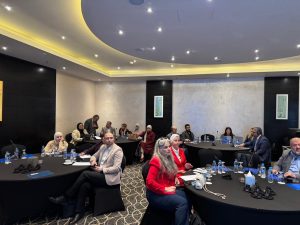
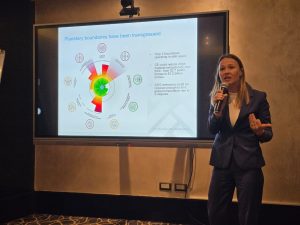
In November 2026, Tulip travelled to Amman for a first field mission, conducting stakeholder meetings and organising a policy workshop to map priorities and lay the groundwork for the project’s analytical and capacity-building work.


Coordination


Quick access
Our publications
-
 Policy Report
Circular Innovation and Ecodesign in the Textiles Sector

Our similar projects
-
- Policy Research & Analysis
Policy Support to the European Commission on EU Circular Economy Legislation and Developing Countries
-
- Policy Research & Analysis
International Resource Panel Report: Socio-Economic Implications of Enhancing Resource Efficiency